
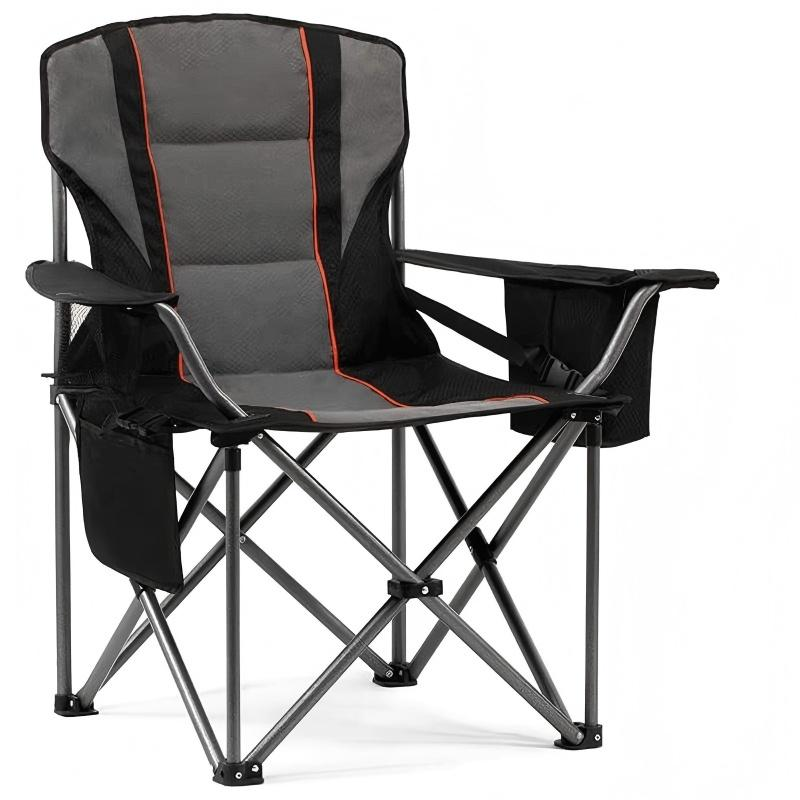
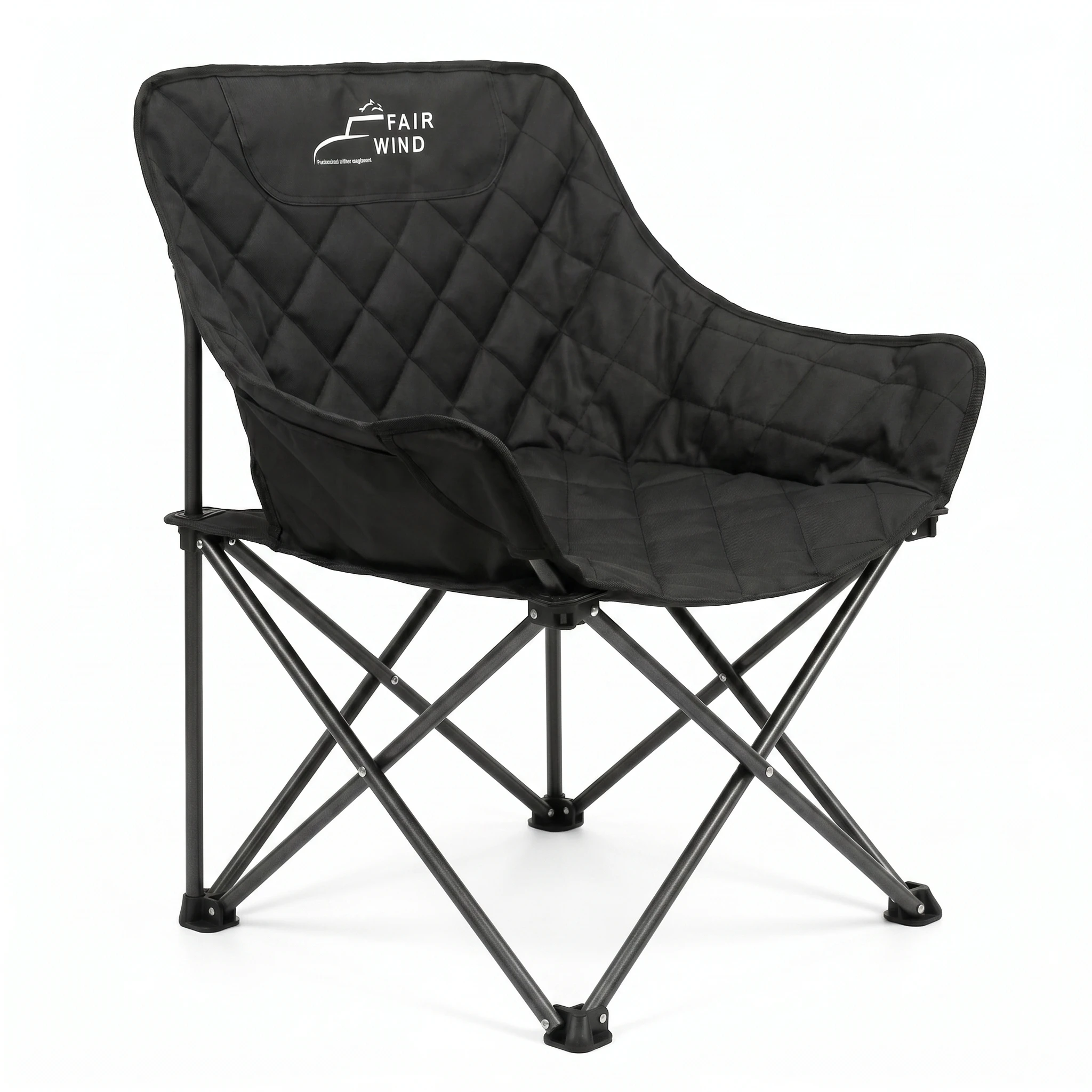
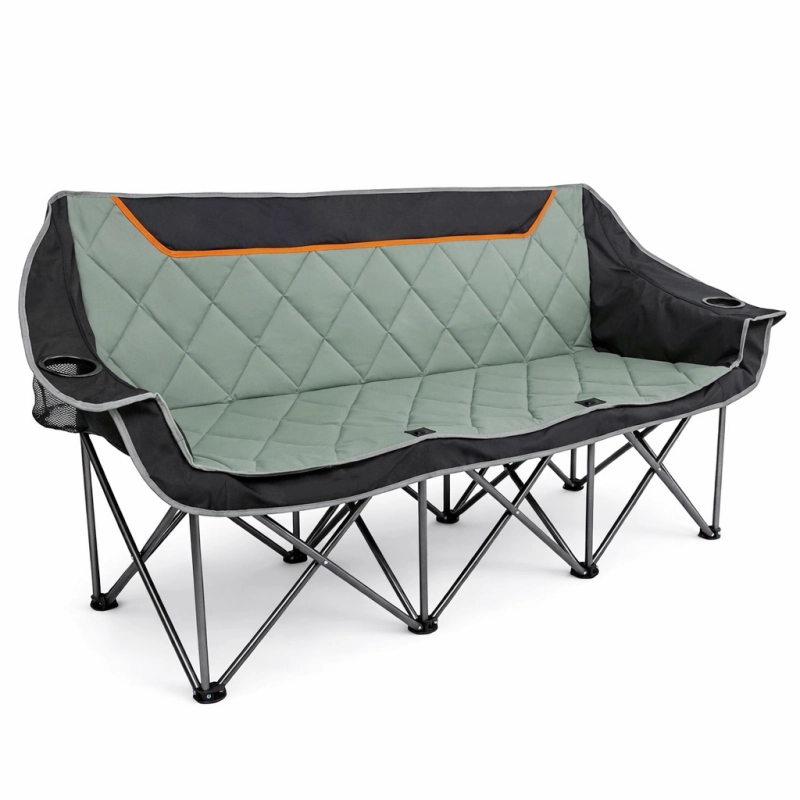
Choosing the right camping chair for wholesale orders requires more than comparing unit prices. Importers, retailers, distributors, and outdoor brands must evaluate comfort, frame construction, fabric strength, weight capacity, folding design, packaging efficiency, target users, and supplier reliability. The ideal chair for a beach retailer may be very different from one designed for hunting, family camping, festivals, or premium outdoor leisure. This guide explains how to compare chair categories, estimate commercial potential, control product quality, and select a dependable supplier. It also covers customization, sampling, testing, MOQ planning, and the key purchasing factors that influence long-term sales performance.
Why Camping Chair Selection Matters in 2026
Outdoor recreation continues to attract a broad and increasingly diverse customer base. The Outdoor Industry Association reported that 183.2 million Americans participated in outdoor recreation during 2025, representing 59% of the population aged six and older. Participation among children, seniors, women, and Hispanic consumers also increased, giving outdoor brands access to a wider range of potential customers.
Camping remains especially relevant. KOA reported that more than 52 million North American households camped during 2025. Modern campers are also placing greater emphasis on wellness, connection, convenience, and meaningful outdoor experiences. These changes increase demand for seating products that combine portability with home-like comfort.
The chairs and stools segment of the camping furniture market generated approximately USD 139.3 million in global revenue in 2025 and is projected to reach USD 205.3 million by 2033. This indicates continuing commercial opportunity for wholesalers that can offer the right designs, specifications, and price levels.
However, expanding demand does not mean every camping chair will sell equally well. Wholesale buyers must understand who will use the chair, where it will be sold, how it will be transported, and which benefits will influence the purchasing decision.
Define Your Target Market Before Comparing Products
The first step is identifying your target customer and sales channel. A product developed for a specialist hunting retailer should not use the same specifications as a promotional chair sold through a supermarket.
Consider the following questions:
- Who is the end user?
- Where will the chair be used?
- How often will it be carried?
- How long will users sit in it?
- Is the customer price-sensitive or comfort-focused?
- Will the product be sold online or in physical stores?
- Is the chair intended for casual, family, professional, or premium use?
A mass-market retailer may prioritize low cost, compact packaging, and simple features. An outdoor specialty brand may focus on frame strength, fabric performance, weight, and ergonomics. A premium ecommerce seller may need a visually distinctive and highly comfortable camping chair that can command a higher selling price.
Your target market should determine the product, not the other way around.
Compare the Main Camping Chair Categories
Different chair types serve different commercial purposes. A balanced wholesale program often includes several categories rather than one universal model.
| Chair Type | Main Selling Point | Suitable Customers | Wholesale Positioning |
|---|---|---|---|
| Standard Camping Chair | Familiar design and broad usability | General campers, families, events | Core volume product |
| Beach Chair | Low seating and leisure comfort | Beachgoers, resorts, coastal retailers | Seasonal lifestyle product |
| Kids Chair | Smaller size and child-friendly design | Families and children’s retailers | Family assortment extension |
| Hunting Chair | Stability and outdoor functionality | Hunters, anglers, professional users | Specialized product |
| Rocking Chair | Relaxing motion and premium comfort | Car campers, RV users, leisure buyers | Premium differentiation |
| Director Chair | Upright support and strong structure | Events, campsites, commercial buyers | Mid-to-premium product |
| Moon Chair | Deep and relaxed seating | Younger users and lifestyle markets | Visual and comfort product |
| Stool | Small size and portability | Hikers, anglers, event users | Entry-price accessory |
| Bungee Chair | Flexible support and distinctive appearance | Casual leisure and younger consumers | Lifestyle-oriented product |
| Stadium Seat | Compact support for benches and stands | Sports fans and event users | Niche event product |
There is no single best camping chair for all users. The right category depends on the business model and intended use.
A standard folding model may generate high order volume, while a Rocking Chair or Director Chair may provide better margins. A stool can support impulse purchases, while a Hunting Chair may attract customers willing to pay more for specialized features.
Match Chair Products with Your Tent Assortment
Wholesale buyers selling multiple camping products should create a coordinated assortment. Chair selection can be matched naturally with different tent categories.
- Backpacking Tents pair well with lightweight stools and compact chairs.
- Pop Up Tents pair well with affordable family chairs and Kids Chairs.
- Inflatable Tents pair well with Director Chairs, Moon Chairs, and premium Rocking Chairs.
- Rooftop Tents pair well with compact but supportive chairs for road trips and overlanding.
This type of product matching helps retailers create complete camping collections instead of isolated products. It can also increase order value by allowing buyers to purchase tents, chairs, and related accessories from one supplier.
For example, a lightweight chair designed for Backpacking Tents should prioritize compact dimensions and carrying weight. A chair for Inflatable Tents can focus more heavily on comfort because users are more likely to travel by car and remain at one campsite for longer periods.
Evaluate Comfort from the End User’s Perspective
Comfort is one of the strongest drivers of customer satisfaction. However, comfort is created by several factors rather than padding alone.
When evaluating a comfortable camping chair, review:
Seat width
A wider seat can improve comfort, particularly for family, RV, and car-camping markets. However, additional width increases product weight, carton size, and material cost.
Seat depth
A deep seat creates a relaxed experience, which suits Moon Chairs and lounge-oriented products. A shallower and more upright seat is often better for dining, fishing, hunting, or events.
Backrest height
High-back models offer better shoulder and head support. Low-back chairs are generally lighter and more compact.
Seat height
Low chairs work well for beaches and relaxed leisure use. Higher seats make it easier for users to sit down and stand up, which can be important for older customers.
Armrest structure
Fabric armrests are light and economical, while rigid or padded armrests may provide stronger support and a more premium appearance.
Fabric tension
A seat that is too loose may feel unstable. A seat that is too tight may create pressure points. Sample testing should therefore include users of different heights and body types.
The most heavily padded chair is not automatically the most comfortable. Ergonomic dimensions and structural support often matter more than additional filling.
Select the Right Frame Material
Frame material affects weight, durability, cost, corrosion resistance, and selling position.
Steel frames
Steel is widely used because it provides good strength at a competitive cost. It is particularly suitable for:
- Standard folding chairs
- Director Chairs
- Hunting Chairs
- Heavy-duty products
- Promotional and mass-market programs
Steel frames should have a suitable powder-coated or painted finish to improve corrosion resistance. Welding consistency, tube thickness, and joint construction must also be inspected.
Aluminum frames
Aluminum is lighter and naturally more resistant to corrosion. It is useful for:
- Beach Chairs
- Lightweight travel chairs
- Premium portable models
- Products designed for frequent transportation
Aluminum usually costs more than standard steel, so it should support a clear commercial benefit. Buyers should not pay for aluminum unless low weight is important to the target customer.
Hybrid structures
Some products combine steel and aluminum or use different tube specifications in different sections. A hybrid design can balance cost, weight, and stability, but it requires careful engineering and testing.
When comparing quotations, do not evaluate only the frame material name. Ask the supplier for tube dimensions, wall thickness, surface treatment, joint type, and tested load capacity.
Review Fabric Performance and Construction
The fabric of a camping chair must support the user repeatedly while resisting abrasion, moisture, sunlight, and outdoor dirt.
Common options include:
- Polyester Oxford fabric
- Nylon fabric
- Mesh panels
- PVC-coated fabric
- Padded or quilted panels
- Textilene or open-weave materials
Polyester Oxford fabric is common because it offers a practical balance of strength, cost, color options, and print compatibility. Heavier constructions may improve perceived durability, but fabric density alone does not guarantee performance.
Buyers should review:
- Fabric composition
- Fabric weight or denier
- Coating type
- Tear strength
- Colorfastness
- Abrasion resistance
- UV resistance
- Water resistance
- Seam construction
- Reinforcement at stress points
Double-layer fabric and bar-tack stitching may be needed around corners, armrests, and frame connection points. Mesh can improve airflow in warm climates, while padded panels are more appropriate for premium and colder-weather products.
Verify Load Capacity Instead of Relying on Marketing Claims
Weight capacity is an important selling point, especially for heavy-duty and oversized models. However, a printed weight rating is only meaningful when supported by appropriate testing.
Ask the supplier to explain:
- Whether the rating is based on static or dynamic testing
- How long the test load was applied
- Whether repeated sitting simulations were conducted
- Which part failed first during development testing
- Whether the production model matches the tested sample
A wholesale buyer should also distinguish between maximum test load and recommended user load. Selling a chair at its structural limit can increase warranty and safety risks.
For broader retail markets, it can be useful to offer several weight classes:
- Lightweight standard models
- Medium-duty family models
- Heavy-duty or oversized models
This structure helps customers understand the range and allows retailers to build clear price levels.
Examine the Camping Chair Fold and Setup Experience
The exact camping chair fold design affects convenience, transportation, carton efficiency, and customer complaints.
Common folding systems include:
- Quad-fold frames
- Flat-fold frames
- Scissor frames
- Collapsible pole systems
- One-step folding mechanisms
- Folding director-style frames
A quad-fold chair is familiar and usually fits into a carry bag. A flat-fold chair may offer better seating structure but can require more storage space. Compact collapsible chairs can be excellent for travel but may require more assembly.
During sample evaluation, check:
- How quickly the chair opens
- Whether users understand the mechanism without instructions
- Whether fingers can be pinched near joints
- Whether the chair locks securely
- Whether the carry bag is easy to use
- Whether the folded product is balanced when carried
- Whether the mechanism remains smooth after repeated cycles
A complicated camping chair fold may create attractive compact dimensions, but it can also increase return rates when customers find the product difficult to assemble.
Consider Packaging and Container Efficiency
Wholesale profitability is influenced by more than factory price. Product size, master carton design, and container loading quantity can significantly affect landed cost.
Before confirming an order, request:
- Individual package dimensions
- Master carton dimensions
- Gross and net weight
- Quantity per carton
- Estimated loading quantity for common containers
- Pallet information where applicable
A chair with a slightly lower unit price may become more expensive if it has inefficient packaging. Similarly, a more compact model may justify a higher factory price if it substantially reduces transportation and warehousing costs.
Packaging must also protect the frame finish and fabric. Internal separators, plastic bags, edge protection, and reinforced cartons may be necessary for heavier products.
For ecommerce orders, stronger packaging is particularly important because individual cartons may pass through multiple distribution points.
Decide Which Features Add Commercial Value
Additional features can differentiate the product, but every feature adds cost, weight, and potential quality risks.
Common features include:
- Cup holders
- Cooler bags
- Side storage pockets
- Phone pockets
- Headrests
- Footrests
- Adjustable armrests
- Canopies
- Carry straps
- Rocking mechanisms
- Removable cushions
- USB-powered heating systems
A heated camping chair may attract customers in cold-weather, stadium, hunting, and premium leisure markets. However, it requires more careful evaluation than a basic chair.
For a heated camping chair, review:
- Power source
- Battery compatibility
- Heating zones
- Temperature settings
- Runtime
- Wiring protection
- Washability
- Safety instructions
- Relevant electrical requirements for the target market
A heating system can support premium pricing, but it also increases sourcing complexity. Buyers should confirm responsibility for batteries, chargers, product documentation, and after-sales support.
The safest product strategy is to add features that solve a clear customer problem rather than adding accessories simply to make the specification list longer.
Balance Quality, Wholesale Price, and Retail Margin
The lowest quotation does not always produce the highest profit. Wholesale buyers should calculate the complete commercial picture.
The true cost includes:
- Product price
- Packaging
- Testing
- Inspection
- Freight
- Customs duties
- Warehousing
- Marketplace fees
- Expected return rate
- Warranty support
- Promotional discounts
A basic chair may provide strong volume but limited margin. A more distinctive comfortable camping chair may sell in lower quantities but create better gross profit per unit.
A useful wholesale range often includes:
- Entry-level product for price-sensitive buyers
- Mid-range product with improved comfort and features
- Premium product with stronger materials or specialized functions
This good-better-best structure allows retailers to serve multiple customers and encourages product upgrades.
Plan MOQ and Order Quantities Carefully
MOQ depends on the frame, fabric, color, logo, packaging, and level of customization.
Standard colors and existing frames usually allow more flexible ordering. New structures, custom fabric colors, printed patterns, or special packaging may require higher quantities.
Before placing a large order:
- Confirm the target selling price.
- Estimate realistic sales by channel.
- Order samples.
- Test the packaging and chair.
- Consider a smaller initial order.
- Collect customer feedback.
- Improve the next production run.
For new products such as a heated camping chair, Rocking Chair, or Bungee Chair, a controlled first order may be safer than immediate large-volume purchasing.
Inspect Samples Before Approving Production
A sample should be evaluated as both a product and a commercial item.
Review the following:
- Overall dimensions
- Sitting comfort
- Frame stability
- Fabric tension
- Stitching quality
- Load performance
- Folding action
- Surface finish
- Color accuracy
- Logo position
- Carry bag
- Warning labels
- Instruction manual
- Packaging
Photographs alone are not enough. The buyer or an appointed inspector should physically open, close, carry, sit in, and compare the product.
If the sample requires changes, document each revision clearly. Use photographs, measurements, drawings, and marked comments rather than general phrases such as “make it stronger” or “improve comfort.”
The approved sample should become the production reference.
Establish a Practical Quality-Control Plan
Quality control should begin before mass production rather than at the final inspection stage.
A basic QC plan can include:
Incoming material inspection
Check fabric, tubes, plastic parts, fasteners, foam, mesh, and packaging materials.
In-process inspection
Monitor cutting, sewing, welding, frame assembly, coating, and accessory attachment.
Pre-production sample approval
Confirm all final specifications before full production begins.
Final random inspection
Evaluate quantity, workmanship, dimensions, function, packaging, and labeling.
Load and cycle testing
Test structural stability and repeated folding performance according to the agreed protocol.
Common defects include:
- Uneven frame legs
- Rough welds
- Damaged powder coating
- Loose stitching
- Incorrect fabric color
- Poor logo placement
- Weak armrest attachments
- Missing accessories
- Tight or unstable folding mechanisms
A dependable camping chair factory should be willing to discuss defect standards and inspection procedures before the order is placed.
How to Choose a Camping Chair Factory
A reliable camping chair factory should demonstrate more than production capacity. It should understand different product categories, materials, user scenarios, and export requirements.
Evaluate the factory based on:
- Years of relevant manufacturing experience
- Available chair categories
- Factory equipment
- Welding and sewing capabilities
- Product development support
- Sample accuracy
- Quality-control procedures
- Export market experience
- Production lead time
- Communication speed
- Packaging capability
- Corrective-action process
Visiting the supplier or reviewing a detailed factory page can help buyers understand whether the operation is suitable for repeat wholesale orders.
A factory with many products is not automatically better. Category experience and stable execution are more valuable than an excessively large catalog.
How to Evaluate a Camping Chair Manufacturer
A professional camping chair manufacturer should be able to translate a business requirement into a practical product specification.
For example, when a buyer requests the best camping chair for family retail, the supplier should ask about:
- Target retail price
- Customer body size
- Preferred frame material
- Required weight capacity
- Selling region
- Packaging limitations
- Main use scenario
- Desired features
- Order quantity
A supplier that immediately sends a quotation without understanding these details may be treating the project as a simple transaction.
A strong camping chair manufacturer can also recommend improvements. It may suggest changing the chair width, fabric, carton structure, frame coating, or accessory configuration to make the product more suitable for the market.
How to Compare a Camping Chair Company
When selecting a camping chair company, compare total capability rather than unit price alone.
| Evaluation Area | Questions to Ask |
|---|---|
| Product Experience | Does the supplier manufacture the required chair category regularly? |
| Development | Can it modify size, structure, fabric, and accessories? |
| Quality Control | Are inspections documented and repeatable? |
| Capacity | Can it support seasonal and repeat orders? |
| Packaging | Can it meet retail and ecommerce requirements? |
| Communication | Are specifications and revisions handled accurately? |
| Compliance | Can it support required testing and documentation? |
| Service | Does it respond properly when production problems occur? |
You can also review supplier project cases to assess whether the company has experience supporting different buyers and use scenarios.
The right camping chair company should offer consistent production, realistic advice, and transparent communication.
Use Customization to Avoid Direct Price Competition
Custom development helps brands create recognizable products and reduce direct comparison with generic listings.
Common customization options include:
- Fabric colors
- Printed patterns
- Frame colors
- Logo printing or embroidery
- Carry-bag branding
- Cup-holder configuration
- Storage pockets
- Seat dimensions
- Weight capacity
- Retail packaging
- Instruction manuals
- Product bundles
However, customization should support a commercial purpose.
For example, a premium comfortable camping chair may use a wider seat, padded headrest, reinforced fabric, and branded storage bag. A hunting model may use camouflage fabric, silent accessories, and a stable rotating base. A beach model may use corrosion-resistant materials and a lower seat height.
Avoid adding expensive features that customers cannot see, understand, or value.
Common Wholesale Purchasing Mistakes
Several errors repeatedly create problems in wholesale chair programs.
Choosing only by unit price
A low quotation may hide thinner tubes, lighter fabric, weaker stitching, or poor packaging.
Ordering before testing
A chair may look correct in photographs but feel unstable or uncomfortable during use.
Using one model for every market
Different users need different seat heights, weights, dimensions, and features.
Ignoring carton dimensions
Poor packaging efficiency can eliminate the savings from a low product price.
Accepting unclear load claims
Weight capacity should be supported by a defined test method.
Overloading the product with features
Unnecessary accessories increase cost and defect risk.
Selecting a supplier without category experience
A supplier unfamiliar with chair structures may struggle with stability, ergonomics, or repeat production.
Wholesale Camping Chair Buying Checklist
Use the following checklist before confirming an order:
- Target market and sales channel defined
- Chair category selected
- Target retail and wholesale price confirmed
- Seat dimensions checked
- Frame material and tube specifications confirmed
- Fabric construction approved
- Weight capacity verified
- Folding system tested
- Accessories confirmed
- Logo and colors approved
- Packaging dimensions reviewed
- Container loading estimated
- MOQ accepted
- Production lead time confirmed
- Inspection standard agreed
- Final sample approved
- Warranty and claim process discussed
A structured checklist reduces misunderstandings and makes supplier comparisons more objective.
FAQs
What is the best camping chair for wholesale?
The best camping chair depends on the target customer. Standard folding chairs often work well for broad retail, while Rocking Chairs, Director Chairs, and Moon Chairs can support premium positioning. Lightweight chairs suit travel, and heavy-duty chairs suit comfort-oriented markets.
What makes a comfortable camping chair?
A comfortable camping chair combines suitable seat width, depth, height, back support, fabric tension, and frame stability. Padding can improve comfort, but correct dimensions and support are usually more important.
Is a heated camping chair suitable for wholesale orders?
A heated camping chair can be attractive for cold-weather camping, hunting, sports, and premium outdoor markets. Buyers must carefully evaluate power systems, heating performance, safety, instructions, and target-market requirements.
What should I check in a camping chair fold mechanism?
Check whether the camping chair fold mechanism is intuitive, smooth, secure, and safe. Test repeated opening and closing, carry-bag fit, joint stability, and possible finger-pinch areas.
How do I choose a camping chair factory?
Choose a camping chair factory based on category experience, sample quality, frame and sewing capability, QC procedures, communication, capacity, and packaging support rather than price alone.
What information should I send to a camping chair manufacturer?
Provide your target market, product category, retail price, required load capacity, materials, dimensions, features, colors, branding, packaging, MOQ, testing needs, and expected delivery schedule.
Can a camping chair company customize products for private labels?
A capable camping chair company can usually customize fabric colors, logos, frame finishes, dimensions, accessories, carry bags, labels, manuals, and retail packaging for private-label programs.
Conclusion:
Choosing the right camping chair for wholesale orders requires a balanced evaluation of customer needs, comfort, structure, materials, folding design, load performance, packaging, pricing, and supplier reliability. Buyers should define the market first, compare physical samples, verify specifications, calculate landed cost, and establish clear quality standards before mass production. A reliable manufacturing partner should also support product selection, customization, testing, packaging, and repeat supply. Fairwind offers multiple outdoor seating solutions for retail, distribution, private-label, and project requirements. Visit the Fairwind homepage, explore our factory capabilities, review our projects, or contact us to discuss your wholesale chair program.