
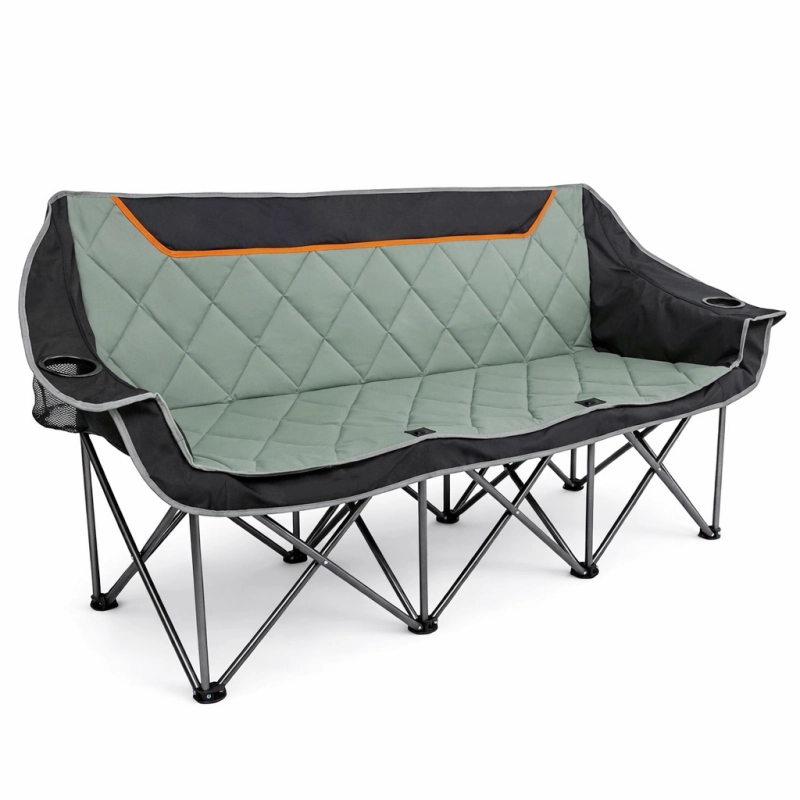
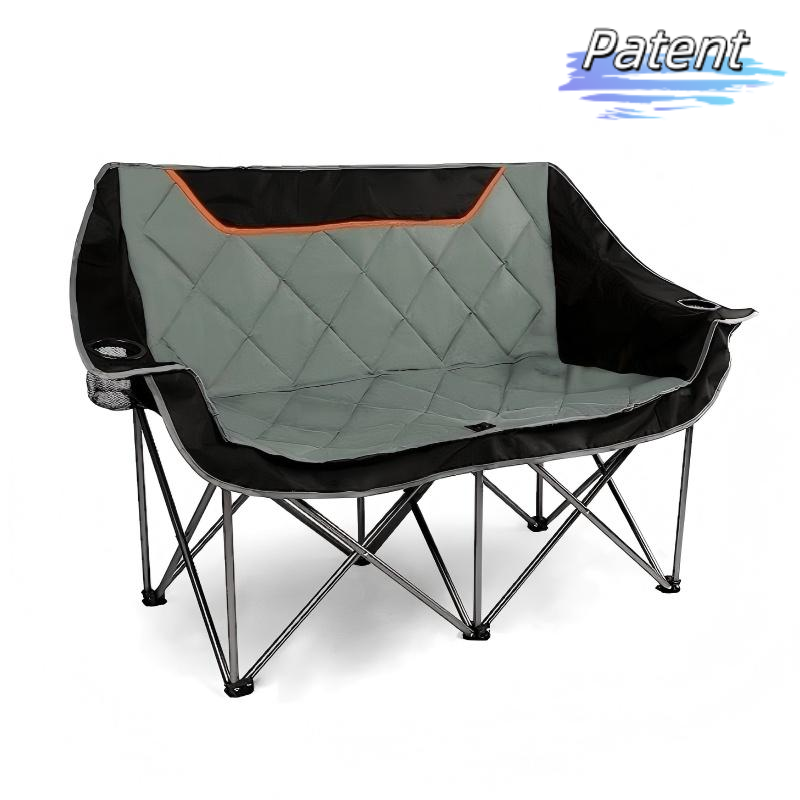
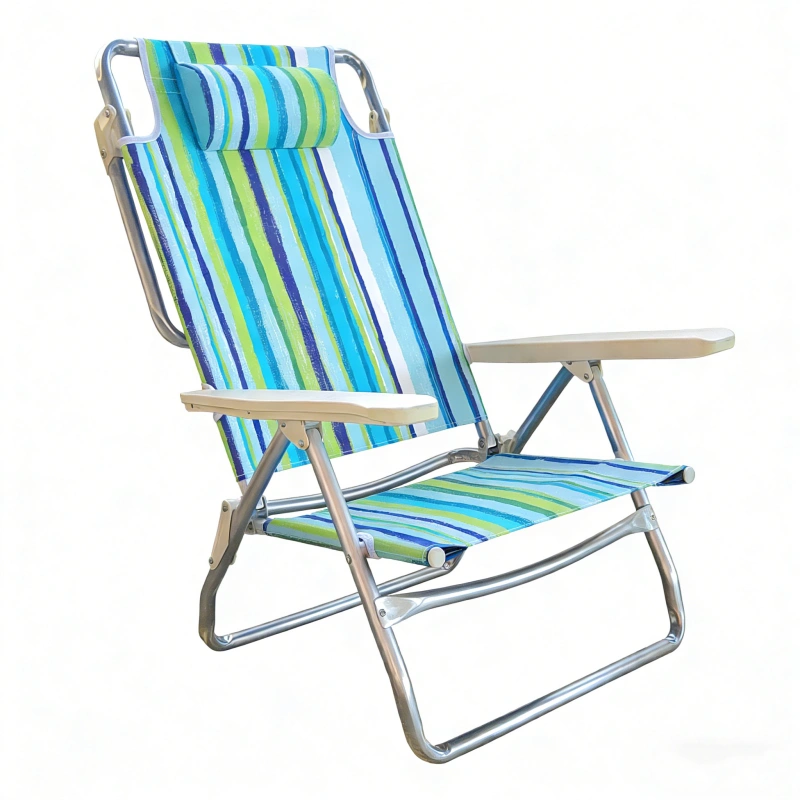
Shipping Cost Has Become a Strategic Issue in the Camping Chair Business
For global buyers sourcing bulk camping chairs, shipping cost is no longer a secondary calculation—it has become a decisive factor in product profitability. Rising freight rates, stricter courier size rules and the rapid growth of cross-border e-commerce are forcing brands, importers and distributors to rethink how products are designed, packed and shipped.
As an experienced folding chairs manufacturer, we have seen a clear shift in buyer priorities. Today’s procurement teams are not only asking about materials, load capacity or pricing. They are increasingly focused on folded dimensions, carton efficiency and whether a chair design is suitable for both container shipping and last-mile delivery. This is where folding structure innovation plays a critical role.
A truly compact folding design does more than save space—it directly reduces shipping costs across the entire supply chain.
Traditional Camping Chair Designs: Where Shipping Costs Quietly Accumulate
Many traditional camping chairs were originally designed for retail display or basic outdoor use, not for modern logistics systems. While these designs may fold, they often remain bulky once collapsed. For buyers ordering bulk camping chairs, this creates inefficiencies at multiple stages.
At the sea freight level, oversized folded dimensions limit how many units can be loaded into a container. Even a small increase in folded thickness can significantly reduce total loading quantity, raising the cost per unit. At the e-commerce level, the problem becomes even more visible. Large cartons frequently exceed courier size thresholds, triggering higher shipping brackets or oversized surcharges.
From a logistics standpoint, the issue is not the chair itself, but the lack of structural optimization. Without deliberate folding engineering, packaging volume grows unnecessarily—and shipping costs rise accordingly.
What Makes a Camping Chair Truly “Compact” After Folding
Compactness is not achieved by simply adding a hinge or folding joint. From the perspective of an outdoor folding chairs manufacturer, true compact folding is the result of integrated structural planning. Key factors include how the frame tubes intersect, how fabric tension is released during folding and whether the folded profile distributes thickness evenly. Chairs that collapse into a long, narrow form are far more logistics-friendly than those that fold into irregular shapes.
Importantly, compact folding does not mean sacrificing comfort or durability. Advanced folding structures allow the chair to maintain strong load capacity while minimizing folded volume. This balance is increasingly expected by global buyers who need products that perform well both outdoors and in transit.
One Folding Design, Two Cost Models: Sea Freight and Parcel Shipping
Modern camping chair buyers often operate across multiple sales channels. A single product may be shipped in containers to regional warehouses while also being fulfilled directly to consumers through e-commerce platforms. This creates two very different cost models—but a compact folding structure can optimize both.
For container shipping, compact designs allow more units per pallet and per container, reducing average freight cost per chair. For parcel shipping, reduced folded dimensions help products stay within standard courier size limits, avoiding costly surcharges.
From our experience producing bulk camping chairs, the most successful designs are those that consider both scenarios from the earliest development stage. Folding structure innovation becomes a strategic tool, not just a design feature.
Compact Folding Design and Its Impact on E-commerce Fulfillment
E-commerce logistics is unforgiving when it comes to size and weight. Platforms and courier networks calculate shipping fees based on dimensional weight as well, not just actual weight. A chair that is only a few centimeters too wide or thick can fall into a higher pricing tier.
This is why many brands now request custom camping chair solutions specifically optimized for online sales. Compact folding structures enable smaller cartons, lower dimensional weight, and more predictable fulfillment costs. They also reduce the risk of damage during transit, as tighter packaging minimizes internal movement.
For B2B buyers operating DTC websites, Amazon stores or omnichannel models, compact folding is no longer optional—it is a competitive necessity.
OEM Camping Chair Development: Designing for Logistics from Day One
In traditional OEM projects, logistics considerations were often addressed after the product design was finalized. Today, that approach is no longer viable. Leading buyers expect OEM camping chair development to integrate folding structure, packaging and shipping efficiency from the very beginning. By aligning engineering and logistics teams early, manufacturers can optimize joint placement, tube length and folding angles to achieve compactness without increasing production cost. This integrated approach ensures the final product meets both performance and shipping requirements.
For buyers, this means fewer surprises, more stable landed costs and a product that scales efficiently as order volumes grow.
What B2B Buyers Should Ask a Folding Chairs Manufacturer
Choosing the right folding chairs manufacturer is no longer just about price or capacity. Buyers should evaluate whether a supplier understands modern logistics challenges.
Key questions include whether the manufacturer can provide folded dimension data, container loading simulations, and parcel shipping references. It is also important to understand whether the supplier has experience producing chairs for e-commerce-driven brands and whether they can support channel-specific structural adjustments.
Manufacturers who treat folding structure as a core competency, rather than an afterthought, are better positioned to support long-term buyer growth.
The Future of Camping Chair Design: Compact, E-commerce-Ready and Global
The global camping market continues to evolve, and logistics efficiency is becoming one of its defining trends. As an outdoor folding chairs manufacturer, we see compact folding structures becoming a baseline requirement rather than a premium feature.
Design innovation is shifting toward products that are easy to ship, easy to store, and easy to fulfill across borders. Buyers sourcing bulk camping chairs increasingly expect designs that align with both wholesale distribution and direct-to-consumer delivery.
In this environment, folding structure innovation is not just reducing shipping costs—it is shaping the future competitiveness of camping chair brands worldwide.
Conclusion: Why Folding Structure Innovation Creates Long-Term Value
For B2B buyers, shipping cost reduction is not achieved through negotiation alone. It starts with product design. Compact folding structures directly lower logistics expenses, improve channel flexibility, and protect margins across volatile freight markets.
Whether developing a custom camping chair for a growing brand or launching an OEM camping chair program for global distribution, folding innovation delivers measurable, long-term benefits. Partnering with an experienced folding chairs manufacturer that understands these dynamics is a strategic investment—one that pays off with every shipment.